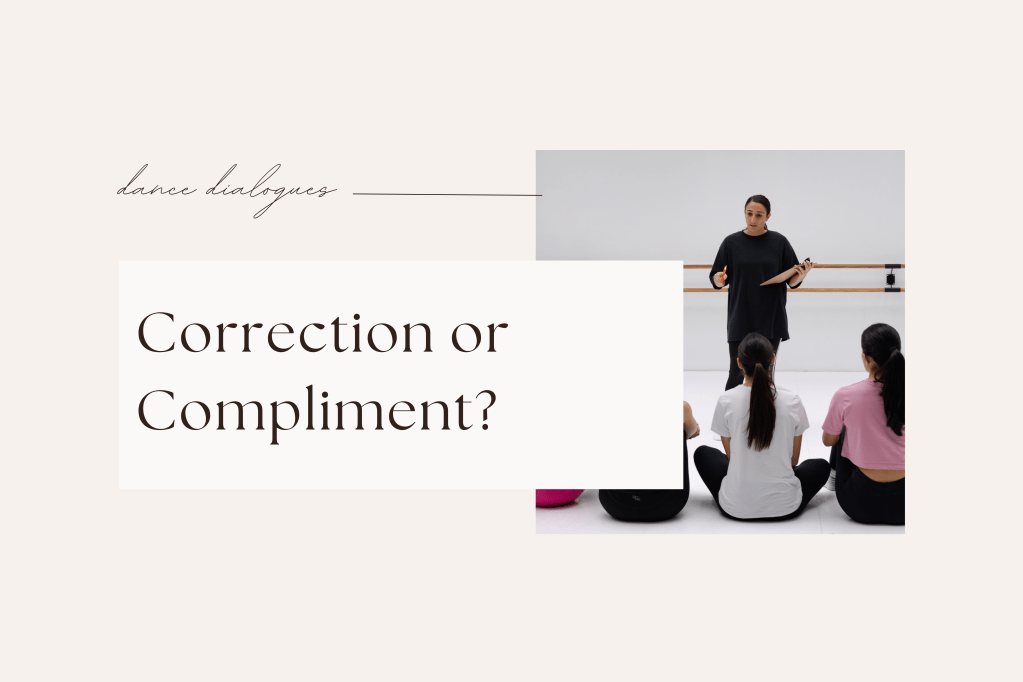
While scrolling through Instagram the other night, I found myself in awe watching one of the greatest dancers in history—Sylvie Guillem—coaching two Principal dancers of The Australian Ballet through the Don Quixote Pas de Deux. I’ve admired Sylvie for as long as I’ve known what a professional dancer was: her artistry, her technique, and her (very strong) mind.
There she was, offering honest, detailed corrections to some of the best ballet dancers in the country. And they were soaking it up. Not flinching. Not folding. Just listening. Adjusting. Growing.
I sat there thinking: how lucky are they? To be critiqued by Sylvie Guillem! What a dream for any dancer.
But then I caught myself. Of course I see it that way now—I’m an adult. I’ve learnt over time that feedback is a form of investment, not a personal attack. But it wasn’t always that way.
Like most dancers, I used to take my teacher’s criticism to heart. I deeply cared what she thought, and every correction felt personal. I’d come home upset, venting to my mum, and she would gently remind me:
“The day your teacher stops correcting you is the day you should be worried.”
That stuck with me. And over time, I began to see corrections for what they really are—signs that someone sees your potential and is willing to spend their time and energy helping you reach it.
It’s something I’m working to teach my own students now:
If I’m correcting you, it’s because I care.
If I’m pushing you, it’s because I see more in you than you see in yourself.
But learning to take on corrections is a skill. It takes emotional maturity, trust, and time. Some students naturally thrive on feedback, while others need more support as they learn that a correction isn’t criticism—it’s guidance.
Just like turnout or flexibility, resilience is something you build with practice.
It’s about learning to hear a correction and think, “My teacher believes I can do better,” instead of, “I’m not good enough.” That subtle shift in mindset changes everything.
At the same time, I think as teachers we have to acknowledge that we’re living and teaching in a different world now. The way our words land can feel very different to how they were received a decade ago.
What once felt like encouragement may now be experienced as criticism—not because dancers today are weaker or less committed, but because the world around them has changed.
I’m currently working on how I deliver corrections for this new generation of students. I don’t have it right yet—and I probably won’t for a while—but I’m trying. Because while the message hasn’t changed, the method needs to. We don’t have to lower our standards, but we do need to be mindful of how we guide students toward them.
And here’s the truth: if you want to pursue dance professionally, this is a muscle you have to build. Not all criticism will come wrapped in love. In the professional world, dancers are expected to take on notes without fuss, adapt quickly, and deliver—often with little to no praise. It’s business. You’re being paid to provide a product that matches someone else’s vision.
But in the studio? That’s your training ground. That’s where corrections come from care. That’s where your teacher is invested in you.
So while it might sting at first, I hope every young dancer learns to see corrections for what they truly are:
A compliment in disguise.
Discover more from Kate Grazioli
Subscribe to get the latest posts sent to your email.
 Kate Grazioli