Keeping the Legacy

Choosing a concert name that captures the essence of the year is never easy. I always try to find something that reflects the feeling or theme of the time. This year, the word Legacy felt right. It’s not a word I use lightly; it carries weight, meaning and history. The name has really made me reflect on what it means to leave a legacy — in dance, in teaching, and in life.

When I took over my studio, I didn’t just inherit a business — I inherited a history. Generations of dancers, families, and teachers are all part of the fabric of Coastal Dance. We’ve called the same address home for over forty years, and I often think about how many dancers have discovered their love of dance within those studio walls.

Taking on someone else’s studio is not an easy task, but from the beginning I knew I wanted to keep the legacy that was started alive. It definitely wasn’t all smooth sailing, and I made my fair share of mistakes, but with experience and a bit of perspective, I can now look back and feel proud to have continued the legacy that began long before me.

There’s a real sense of responsibility that comes with taking on someone else’s dream. You want to honour what they built while still finding your own way. Finding that balance took time, but it taught me lessons I never expected about leadership, resilience and the importance of staying true to your “why.”

When I think back to my own teachers, they gave me so much more than technique. They shared their love for dance, their quirks and their sayings—the little things that stay with you long after you leave the room. I still catch myself repeating their words and stories, and it makes me smile. That’s legacy.

The dance world is built on those invisible threads. The way we move, teach, choreograph and perform all comes from somewhere. I sometimes worry that we’re losing touch with that. The world moves fast, and while it’s exciting to be current and forward-thinking, it’s just as important to pause and remember where it all began. Looking back is not always a bad thing.

It makes me proud to tell new families about the long history of Coastal Dance and how the studio has been part of the community for so many years. Chances are, they’ll know someone connected to the studio — a friend, a neighbour or even a parent who once danced here themselves.

Legacy isn’t about living in the past. It’s about carrying the best parts of it forward. It’s about honouring the people who came before us, keeping their lessons alive and adding our own chapter to the story.

That’s what I hope this concert represents. Not just a performance, but a celebration of who we are, where we came from and the generations of dancers who made it possible for us to dance today.


In Pursuit of Excellence

I was recently listening to an interview with serial entrepreneur Emma Grede, co-founder of SKIMS and Good American, who said, “How you do one thing is how you do everything.” That simple line resonated deeply with me. It doesn’t matter whether it’s in work, in life, or in relationships — if you strive for excellence in all that you do, you’ll always be growing, improving, and moving forward.

Although most young dancers dream of turning their passion into a profession, the reality is that not everyone will go on to make a career out of dance. But what I’ve seen time and time again is that the lessons learned through dance stay with you for life, no matter which path you choose to follow.

Dance teaches you so much more than steps. It teaches commitment, resilience, and the importance of showing up — even when things feel hard. It builds confidence, discipline, and self-motivation, both in and out of the studio.

Ultimately, dance shapes who you are and how you move through the world — always in pursuit of excellence.

I was recently chatting with one of my alumni about this very idea — how dance shapes who you become, even long after you leave the studio. We reflected on how many former dancers go on to achieve incredible things in completely different fields, yet still carry that same sense of discipline, work ethic, and drive. It’s something that never really leaves you.

Throughout my life, I’ve worked in other industries, and while I never saw them as my long-term path, I still showed up with the same commitment I learned through dance. I wanted to do each role to the best of my ability, to take pride in the way I worked — no matter how temporary the job was. That mindset, to give your best effort in every situation, is something dance instills deeply.

When we approach every class, every rehearsal, and every opportunity — big or small — with care and intention, we cultivate a habit of excellence that extends far beyond the studio. Whether we’re dancing on stage, teaching in the studio, or working in any other field, the standard we hold ourselves to becomes part of who we are.

When you enrol your child in a dance class, they’re not just learning steps. They’re learning how to listen, to focus, to take pride in what they do, and to want more for themselves. Through dance, they develop an inner drive to keep improving — a lifelong lesson that will carry them through school, work, and every chapter that follows.

To the dancers — I know that sometimes it can feel like we’re always asking for more. To work harder. To pay attention to the details. But what might not seem important now is actually a gift. Every correction, every challenge, every push to be better is shaping you into someone who doesn’t settle for less than their best. You’re being instilled with one of the greatest lessons dance can offer — the pursuit of excellence.

Planning a concert? Remember who it’s for…

I’ve always felt that planning a dance concert is much like planning a wedding. The organisation, the rehearsals, the schedules, the outfits—it all has that same mix of stress, excitement, and anticipation. When I planned my own wedding, it felt exactly like preparing for a concert… just with fewer costume changes and an older cast!

As studio owners and teachers, our minds race with checklists: music edits, lighting cues, ticket sales, backstage helpers, programmes, costumes, hair, makeup. It’s endless. It’s easy to get caught up in the details when you’re the one responsible for pulling it all together and sometimes, in the midst of the chaos, we can forget the most important thing… your concert isn’t about you!

Yes, it’s the biggest event on your studio calendar. Yes, it’s your name on the poster. Yes, people will congratulate you afterwards for an incredible show. But at its core, a dance concert isn’t a showcase of you—it’s a celebration of your students.

That shift in perspective changed everything for me. On concert day, I actually find myself quite relaxed (with the exception of quick costume changes!). The heavy lifting is done. Once that curtain rises, my job is finished. The stage belongs to the kids. People often comment on how happy my students look during their shows, and I think that’s because the pressure isn’t on them to be “perfect.” It’s not about flawless spacing or whether every bow is sitting at the same angle—it’s about joy.

And that joy matters far more than the details we so often obsess over. When you look back on your own concerts as a student, do you remember if your line was perfectly straight or if you nailed every cue? Probably not. What you remember is the thrill of the lights, the rush of the music, the feeling of being celebrated—and maybe even the things that went wrong. Those are the memories our students deserve too.

I remind myself constantly: I’ve had my time on stage. I’ve done my concerts, felt the applause, and collected those memories. Now, it’s about my students. Concert day is where we celebrate every single child—whether they take one class a week or live at the studio six days out of seven. Their experience is equally important.

Of course, as studio owners and teachers, we want things to look polished and professional. We want the audience to be proud of the show they’ve bought a ticket to see. But here’s the secret: the audience is made up of parents, grandparents, siblings, and friends. They aren’t looking for perfection. They’re looking for their child’s smile, their progress, their growth, and the sheer excitement of being part of something special.

So, as concert season approaches, remind yourself our job isn’t to put on a “perfect” concert. Our role is to give our students a joyful one—one that makes them feel proud, celebrated, and connected to their studio family. Because long after the lights go down and the music fades, that feeling will be what stays with them.

Beyond the Studio Walls

When I look back on my dance journey, I can see clearly that it wasn’t a straight line — in fact, it was very zig-zagged. It was full of detours, stop-starts and moments where I had to figure things out. I was lucky to have people encourage me along the way, but what I didn’t have was one consistent person, someone who walked beside me through the ups and downs, guiding me through the industry and helping me make those big decisions. I often wonder how different my journey might have been if I’d had that one steady voice in my corner.

That experience has shaped the kind of teacher I want to be. I don’t just want to teach steps and syllabus work; I want to help my students find their path. For me, that means showing up for them in ways that go beyond the studio walls.

If you want to help your students navigate becoming a professional dancer, you have to be there for them in the little ways that matter most. That might mean sending through an audition notification, taking the time to watch a showreel, writing a reference, answering questions honestly, or simply listening when they need someone in their corner.

I know from my own journey how isolating the industry can feel without a steady guide. And while the zig-zag path I took taught me resilience, it also taught me what was missing. That’s why I make it my responsibility to fill that gap for my students — to be the person who believes in them consistently, not just when they’re paying fees.

Pursuing a dance career is full of knock backs and missed opportunities. It’s not a straight climb to the top, it’s auditions that don’t go your way, jobs that slip through your fingers, and opportunities that pass you by. But the truth is, it’s the getting back up again that makes the difference. The ability to keep going, even when the answer is “no,” is what ultimately leads to a sustainable and successful career.

To be an artist is to live in a world of constant feedback, often judged subjectively. One panel might love you, the next might overlook you. That doesn’t mean your worth as a dancer changes. It just means you have to develop resilience, self-belief and the determination to keep showing up.

I’m not an “industry expert,” and I don’t have a famous profile. But what I do have is an unwavering belief in my students — a belief that they can achieve anything if they’re willing to put in the work. This consistent belief in my students is also a big part of why I think they’ve been so successful.

I’ve seen so many talented dancers over the years who didn’t quite reach the finish line. Not because they lacked ability, but because they didn’t have that constant support — that person in the background encouraging them to keep going when it got hard.

For me, that’s what teaching is about: not just shaping great dancers, but being a source of belief — helping, guiding, and encouraging them for as long as they need.

The True Value of Dance Exams

Like most dance teachers in Australia, I’m currently deep in preparations with my students for their upcoming exams. There are extra lessons, pages of notes, and a whole lot of hard work happening, and it’s easy to think that the mark they receive decides whether the experience has been worth it or not.

But the true value of exams isn’t found in a mark or certificate. It’s in the lessons students gain throughout the process: the discipline to show up, the resilience to keep going when it’s tough, and the understanding that consistent effort over time leads to growth. These are skills that will serve them for life, guiding them well beyond dance and into everything they do.

Dance exams — or any exam, really — give students a tangible goal to work towards, and in an age where it’s so easy to opt out of things, that in itself is valuable. Students learn what it means to commit, to show up consistently, and to keep chipping away even when it feels hard. These experiences remind them that growth doesn’t come from doing what’s easy — it comes from persistence and effort.

Preparing for an exam also teaches students how to sit with discomfort. Standing in front of an examiner, remembering exercises, and performing under pressure is never going to feel completely comfortable — and that’s the point. It’s in those moments that they discover they’re stronger than they thought, and capable of more than they believed.

I recently heard the quote, “Pressure is a privilege,” and it’s completely reframed how I think about doing hard things. It’s easy to feel overwhelmed, but diamonds are formed under pressure — and so are great dancers. Not every child will walk away with the top mark, but almost every child will leave their exam feeling more confident and capable than when they started.

It’s tempting to focus on the certificate they receive at the end, and of course it’s exciting to see a high mark, but that’s not the real measure of success. The true reward is the confidence that comes from setting a goal, putting in the work, and seeing it through. These experiences remind students that they can do hard things — and that perseverance is always worth it.

To every student preparing for an exam right now: what you’re doing is a gift to yourself. Learning how to work towards something over time is a skill that will serve you for life. Whether you walk out with the highest mark or not doesn’t matter — if you’ve shown up, put in the effort, and given it everything you can, you’ve already achieved something worth celebrating.

In a world where instant gratification is everywhere, there’s something truly special about slowly chipping away at a goal and seeing your progress unfold piece by piece. That’s the magic of this process. It’s not just about being a better dancer; it’s about becoming a stronger, more confident, and more determined version of yourself. That is the real success, and it’s something no score can measure.

It’s Only an Opinion

Competitions play an important role in a young dancer’s training, and the results often feel like a big deal, especially when they’re competing regularly. The competition scene has changed significantly in recent years, with new events regularly emerging. As a result, there are more adjudicators, each with their own opinions, leading to increasingly diverse results from event to event.

At the heart of it, though, competition results are just that—opinions. It can be tough when the results don’t reflect your performance, but it’s important to remember that one judge’s opinion doesn’t define your worth as a dancer. It’s their perspective, based on what they value as a winning performance, but it doesn’t mean it’s the ultimate verdict.

The truth is, it’s often the “bad” results that leave the biggest mark. The ones that sting, the ones that make you question yourself—those are the moments when resilience is built. It’s in those times that you learn the most about yourself as a dancer: how to keep showing up, how to take it on the chin, and how to grow from what didn’t go well. Those experiences shape you, teaching you that it’s not the outcome that matters most, but how you respond to the challenges along the way.

And yes, sometimes you might not be someone’s cup of tea, and that’s okay. We can’t be for everyone, no matter how hard we try. It doesn’t mean you’re not good enough or that you’ve failed—it just means you weren’t for them. And that’s a lesson in itself.

I have a clear memory of being a 13-year-old dancer at a competition, and things weren’t going my way. The adjudicator wanted more from me, but I was giving it my all—at least, that’s what I thought. After tears in the car and feeling like I didn’t want to go back, my mum encouraged me to give it one last go. I went back in with nothing to lose, took some risks, and this time, actually gave everything I had. When I received the feedback for that routine, it said, “I knew you had more.”

That one experience left a lasting impression on me. It taught me that you might think you’re giving it your all, but there’s often more left in the tank than you realise. It was a learning moment wrapped in upset and discomfort, but it pushed me to a new level as a dancer—a lesson I’ll never forget.

With the rise of social media, a new layer has been added. After a tough result, it’s easy to feel frustrated and lash out—whether it’s at an adjudicator, another competitor, or even a studio. It’s important to remember, though, that resorting to online abuse or defamation only hurts you. It doesn’t make anything better.

So, when you don’t get the result you were hoping for—what do you do next? Do you turn to social media to vent your frustration? Or do you take a step back, reflect on the experience, and use it as a learning opportunity for next time? It’s the same when you go for an audition and it doesn’t work out. Do you take it as a lesson and fuel your desire to be better, or do you let it define your worth as a dancer and overshadow all the hard work you’ve put in?

In the end, competition results, whether positive or negative, are just a small part of a much bigger journey. The true measure of success isn’t in the trophies or scores—it’s in the lessons we learn, the resilience we build, and the growth we experience along the way.

So, the next time things don’t go as planned, remember that it’s not the final judgment on your ability as a dancer. It’s simply another opportunity to learn, to improve, and to come back stronger. Keep showing up, keep taking risks, and above all, keep believing in yourself. The journey of a dancer is never just about someone’s opinion; it’s about how you grow through the years to become the performer of your dreams.

Where have all the teachers gone?

Owning a dance studio means I’m always on the lookout for teachers — and almost weekly, other studio owners ask if I know anyone. Not just someone to run a class, but someone passionate about passing on what they’ve learnt. Those teachers are becoming harder to find.

What’s most surprising is that this is happening at a time when full-time dance training is at an all-time high. So… where have all the teachers gone?

There seems to be a growing problem in the dance world. Dancers are training harder than ever, but very few are moving into teaching. Somewhere along the way, it stopped being seen as a fulfilling or worthwhile career.

When I trained, we were mentored in a personal way. You had that one teacher who saw your potential, pushed you, believed in you, and eventually took you under their wing as an assistant. That’s how many of us fell in love with teaching, not by accident, but through being guided into it.

These days, the opportunities are still there — to assist, to mentor, to start a teaching career — but many students simply aren’t stepping into them. Dancers train in their own bubble, focused on their own path, without engaging with the community around them. That sense of connection — of giving back, of being part of something bigger than yourself — is being lost. And with it, the next generation of teachers.

Teaching is one of the most rewarding paths a dancer can take. It gives longevity to your career, it keeps your passion alive, and it lets you pass on everything you’ve worked so hard to learn. More importantly, great teaching creates a lasting legacy — one that lives on in every student you influence. In fact, you may even find more fulfillment in teaching than in your own performing career.

If dancers are no longer being encouraged into teaching, supported in the early stages, or even made to see it as a viable and fulfilling option, we are heading toward a very real problem.

And the effects will be far-reaching. Studios will be searching for teachers who simply don’t exist.

A powerful insight I recently came across was in Adam Grant’s book Hidden Potential. He explores the idea of the protégé effect—the phenomenon where teaching someone else actually deepens the teacher’s own understanding. To teach is to learn twice. It forces you to organise your thoughts, reflect on your own process, and truly grasp the ‘why’ behind what you do. It’s a kind of learning that performing alone simply can’t replicate.

Helping dancers step into teaching doesn’t just benefit the next generation—it helps them make sense of their own training in a deeper way.

If we’re not encouraging that, we’re not just losing future teachers—we’re missing a key part of their development.

We need to bring mentorship back. Not just for the students dreaming of the stage but for the ones quietly showing leadership potential in class. We need to offer assistant teaching programs, give them real feedback, and let them experience the satisfaction of teaching a plié or correcting a time step.

Because once they feel what it’s like to help someone else succeed, they might just fall in love with teaching too.

Teaching is not a plan B or even plan C. It’s not what dancers do after they give up the dream. It’s an extension of the dream. A chance to leave a legacy. A chance to keep learning. A chance to be part of something bigger than yourself.

Why Bigger Isn’t Always Better

In the dance world, there’s a growing perception that bigger means better. Bigger studios, more students, flashier social media accounts — it can all look very impressive from the outside. But after decades in this industry, I’ve learned that what looks good on the surface doesn’t always reflect the quality that truly matters.

I run a small, boutique-sized studio where I know every dancer by name. It’s not that I don’t want to be successful, I just believe success isn’t measured by how many students you have, but by how well you serve the ones you do.

Over the years, I’ve learned there’s a sweet spot when it comes to class sizes. When students receive consistent, individualised feedback and are truly known by their teachers, they build strong technique, healthy habits, and a deeper sense of confidence.

They’re not just learning combinations — they’re learning how to think, apply corrections, and take ownership of their development. That kind of training creates dancers who are resilient, adaptable, and prepared for the professional world, not just the next eisteddfod.

Over the years, I’ve had the privilege of training dancers who’ve gone on to work professionally on international stages or have become renown choreographers and teachers. My studio might not be the biggest, but the results speak for themselves. And yet, I’m constantly overlooked.

Why? Because somewhere along the way, “big” became synonymous with “better.”

I watch students with enormous potential follow their friends to larger schools because it’s “the place to be,” not realising that there is no one place to be. There is no one path to success. Dance is not one-size-fits-all. Sometimes being in a smaller studio — one where you’re not just a number, where you’re seen, guided, and mentored — is the very thing that can change the course of a dancer’s journey.

In a big studio, your child might be the 32nd best in their class. At a boutique studio, they might be the second. That difference matters. Not just for their confidence, but for the opportunities they’ll be given, the corrections they’ll receive, and the belief they’ll build in themselves.

When it comes to dance, you need to choose a studio based on what your child needs to thrive. Don’t underestimate the power of a teacher who sees your child’s potential, and has the time and passion to nurture it.

Sometimes, all it takes is one teacher who really sees you to change everything.

I know the power of individualised attention because I lived it. My full-time training cohort ranged from just four to ten dancers at a time. There was nowhere to hide, no chance to slack off, and we were held accountable — every single day. That intensity shaped me. Had I been given the chance to skip a class unnoticed or coast in the back row, I honestly don’t think I would’ve become the dancer — or teacher — I am today.

Before you enrol somewhere because it looks impressive or has a long list of followers, ask about the class sizes. The teachers’ credentials. The success stories. Ask whether your child will be guided, mentored, and supported — not just slotted into a system.

The truth is, some of the best dancers I’ve ever trained would have disappeared in a larger studio. Not every dancer is loud. Not every dancer is confident from day one. Some need time. Some need nurturing. And some need to be in a room where they can be seen.

While a large studio might be the right fit for some, don’t mistake bigger for better. Choose the studio where your child can truly thrive. In the end, it’s not about the size of the studio, but the space where potential is nurtured and seen.

The Start of Something Special

On Friday morning, ten dance teachers and studio owners came together to share food, stories, ideas—and most importantly—connection.

In the lead-up to our first event for the Gold Coast Dance Alliance, I had moments of doubt. Was this a good idea? Would people come? I wasn’t sure how it would go, but by the end of the morning, it was clear—this is exactly what our community had been waiting for.

There’s something so energising about being in a room with people who share the same passion for dance. As dancers and teachers, we’re naturally wired to give—to our students, our studios, our craft. Passion drives us, but it also means we often pour from an empty cup. Friday morning filled mine right back up.

Throughout the morning, what struck me most was how much we all had in common. Shared stories, familiar challenges, mutual connections. The degrees of separation between us were small, and the mutual respect in the room was big.

We’re often so focused on running our own worlds that we forget the value of simply talking to one another. When it’s hard to explain your daily challenges to people outside the industry, it’s such a relief to connect with those who live it too. There was something really comforting about being surrounded by others who just understood—not because you had to explain, but because they live it too.

A huge part of that energy came from Nikita Canning’s workshop. She led a conversation that was both practical and affirming. If you’ve ever felt overwhelmed by social media (and let’s be honest—who hasn’t?), Nikita has a gift for cutting through the noise. She reminded us that showing up online doesn’t have to be perfect—it just has to be real.

Even though many of us have learned on the go and wear countless hats … accountant, counsellor, content creator, costume coordinator, isn’t it such a gift when someone can explain things in a way that actually makes sense? That’s exactly what Nikita did. She gave us tools, but more than that, she gave us clarity and confidence.

It’s time for our dance industry to come together—not in competition, but in collaboration. To return to shared values, professional integrity, and a sense of unity. To lead with kindness, to support one another, and to uphold a code of ethics that reminds us why we do what we do.

Friday was just the beginning, but it felt like the start of something truly special. This idea had been sitting quietly in my mind for years, and I’m so grateful to those who believed in it, showed up, and brought it to life alongside me.

Thank you for your support, your presence, and your encouragement. I can’t wait to keep building this community together.

-Kate
Founder, Gold Coast Dance Alliance

Correction or Compliment?

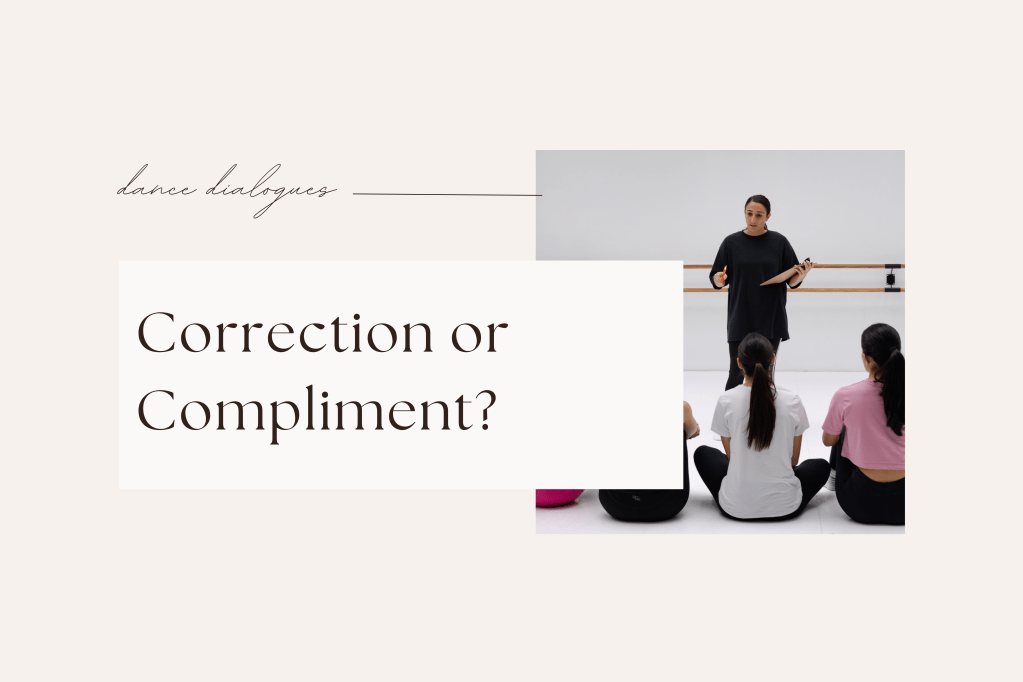
While scrolling through Instagram the other night, I found myself in awe watching one of the greatest dancers in history—Sylvie Guillem—coaching two Principal dancers of The Australian Ballet through the Don Quixote Pas de Deux. I’ve admired Sylvie for as long as I’ve known what a professional dancer was: her artistry, her technique, and her (very strong) mind.

There she was, offering honest, detailed corrections to some of the best ballet dancers in the country. And they were soaking it up. Not flinching. Not folding. Just listening. Adjusting. Growing.

I sat there thinking: how lucky are they? To be critiqued by Sylvie Guillem! What a dream for any dancer.

But then I caught myself. Of course I see it that way now—I’m an adult. I’ve learnt over time that feedback is a form of investment, not a personal attack. But it wasn’t always that way.

Like most dancers, I used to take my teacher’s criticism to heart. I deeply cared what she thought, and every correction felt personal. I’d come home upset, venting to my mum, and she would gently remind me:

“The day your teacher stops correcting you is the day you should be worried.”

That stuck with me. And over time, I began to see corrections for what they really are—signs that someone sees your potential and is willing to spend their time and energy helping you reach it.

It’s something I’m working to teach my own students now:

If I’m correcting you, it’s because I care.

If I’m pushing you, it’s because I see more in you than you see in yourself.

But learning to take on corrections is a skill. It takes emotional maturity, trust, and time. Some students naturally thrive on feedback, while others need more support as they learn that a correction isn’t criticism—it’s guidance.

Just like turnout or flexibility, resilience is something you build with practice.

It’s about learning to hear a correction and think, “My teacher believes I can do better,” instead of, “I’m not good enough.” That subtle shift in mindset changes everything.

At the same time, I think as teachers we have to acknowledge that we’re living and teaching in a different world now. The way our words land can feel very different to how they were received a decade ago.

What once felt like encouragement may now be experienced as criticism—not because dancers today are weaker or less committed, but because the world around them has changed.

I’m currently working on how I deliver corrections for this new generation of students. I don’t have it right yet—and I probably won’t for a while—but I’m trying. Because while the message hasn’t changed, the method needs to. We don’t have to lower our standards, but we do need to be mindful of how we guide students toward them.

And here’s the truth: if you want to pursue dance professionally, this is a muscle you have to build. Not all criticism will come wrapped in love. In the professional world, dancers are expected to take on notes without fuss, adapt quickly, and deliver—often with little to no praise. It’s business. You’re being paid to provide a product that matches someone else’s vision.

But in the studio? That’s your training ground. That’s where corrections come from care. That’s where your teacher is invested in you.

So while it might sting at first, I hope every young dancer learns to see corrections for what they truly are:

A compliment in disguise.

Kate Grazioli

Educator | Studio Owner | Mentor

Skip to content ↓